
A Proving Ground, Not a Waiting Room: The Modern Farm System

Player development used to be a slow burn. Today it’s a sprint. Top prospects are tearing through the minor leagues at a pace that would have seemed reckless a decade ago. Over the past six rookie classes, the traditional developmental timeline hasn’t just sped up it’s been completely redone. When we look at the data it tells a clear story: front offices are no longer waiting for the future they are demanding it now.
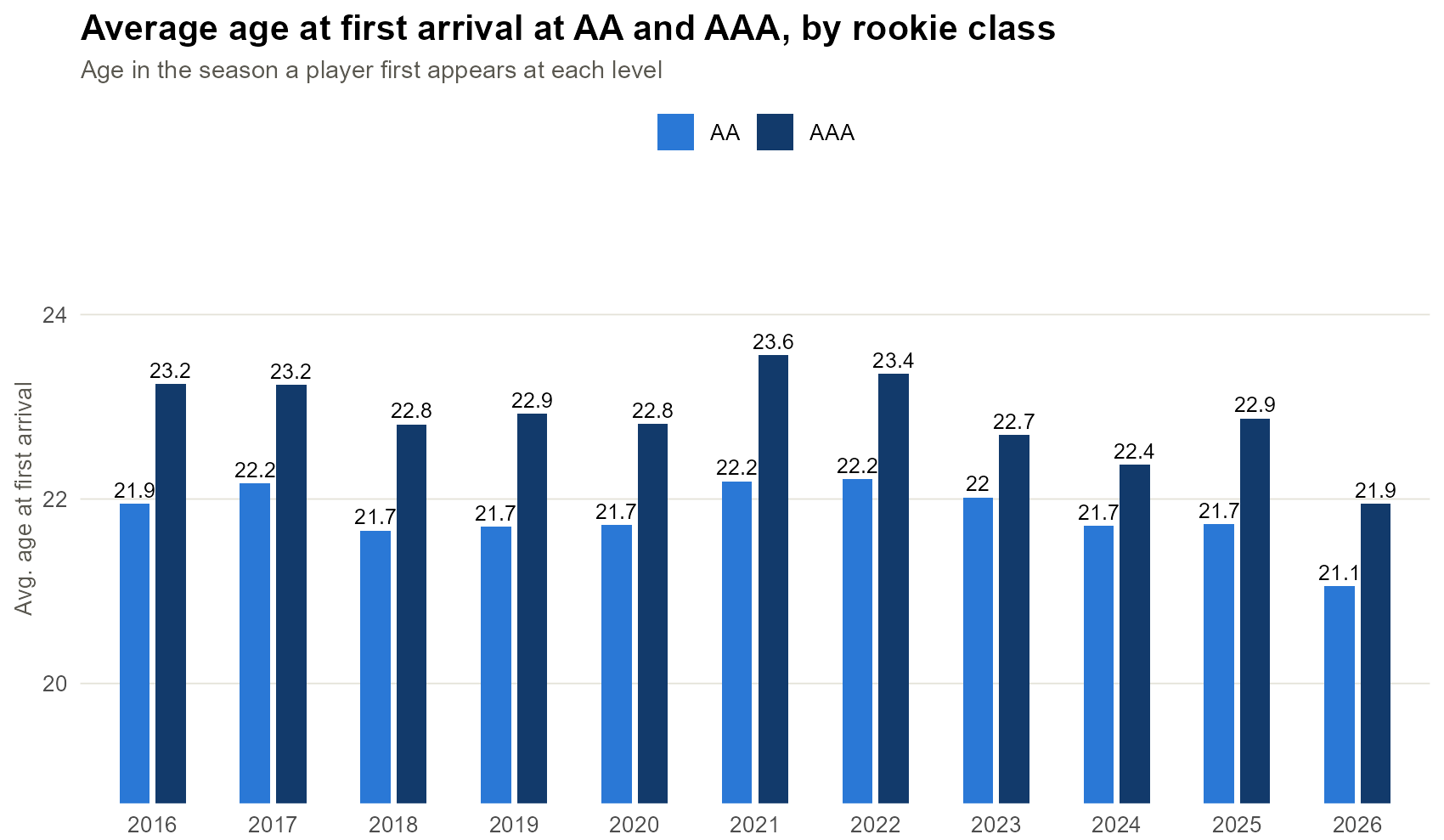
This shift isn’t just an eye-test it is a measurable, post-COVID philosophical pivot. Look at the data from the highest levels of the minor leagues. In 2021, the average age of a Triple-A player who went on to achieve Rookie of the Year eligibility was 23.6 years old. Over the past five seasons, that number has plummeted down to 21.9. Meanwhile, those same elite talents are now conquering Double-A nearly a full year younger than previous cohorts.
The average number of games prospects log at each level exposes exactly how this aggressive strategy works. Players are spending less time than ever in the lower minors, with a distinct drop-off in total games played at the Rookie, Single-A, and High-A levels.
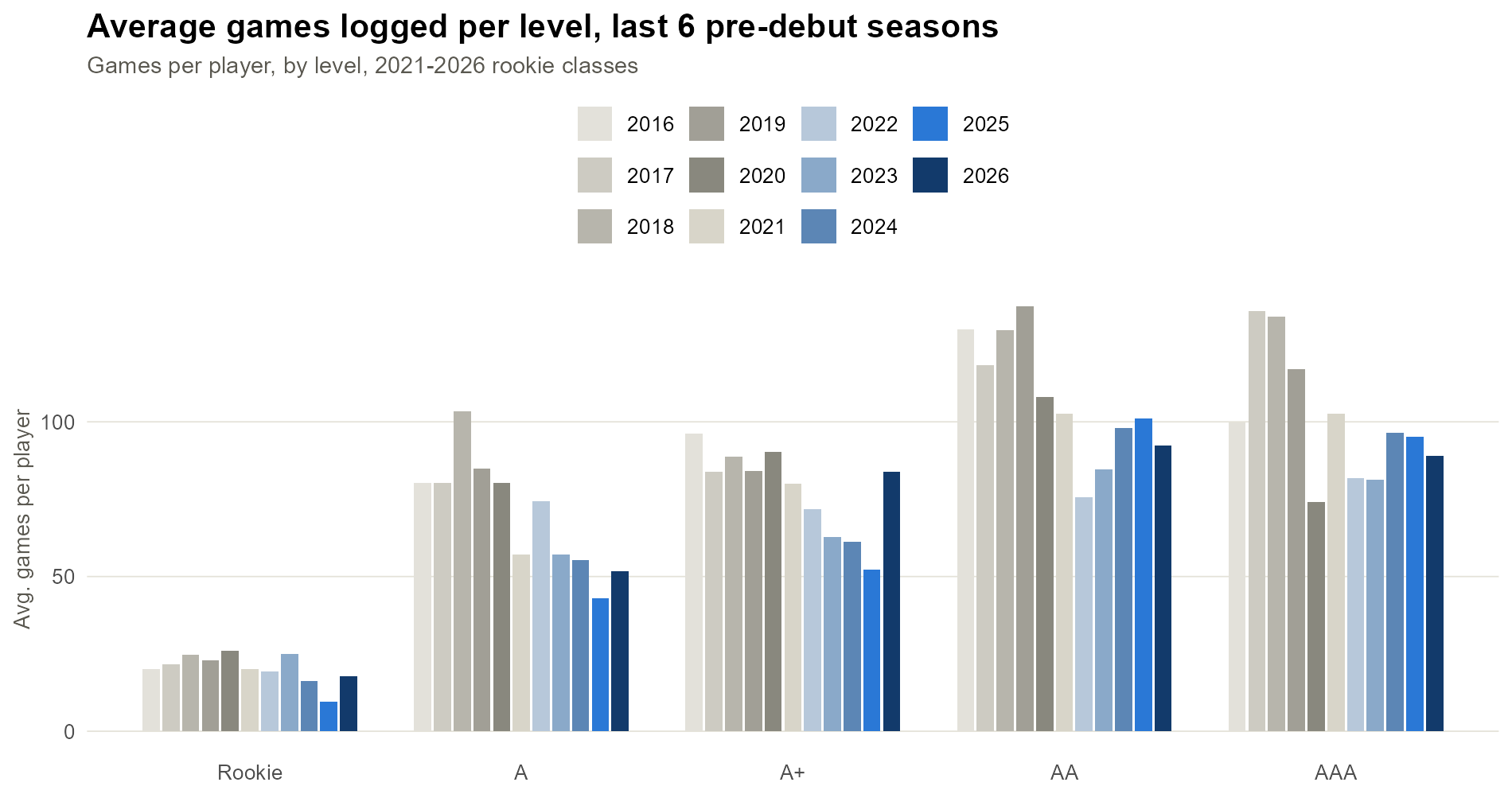
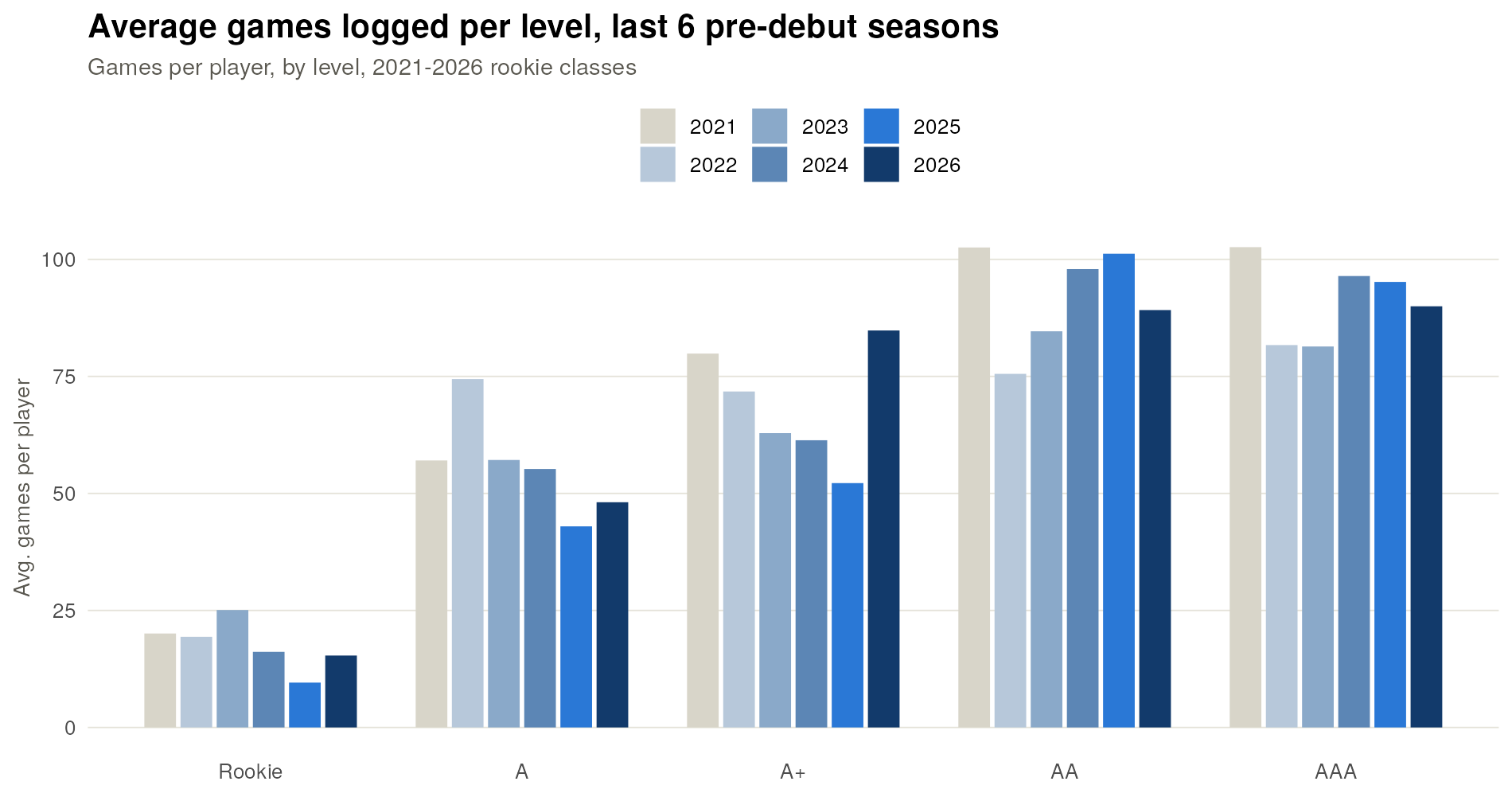
Front offices are challenging elite talent to dominate lower affiliates almost immediately. Once a player checks those early boxes, the training wheels come off. They are thrown straight into a longer, more sustained, and hyper-competitive environment at Double-A and Triple-A to finish their development.
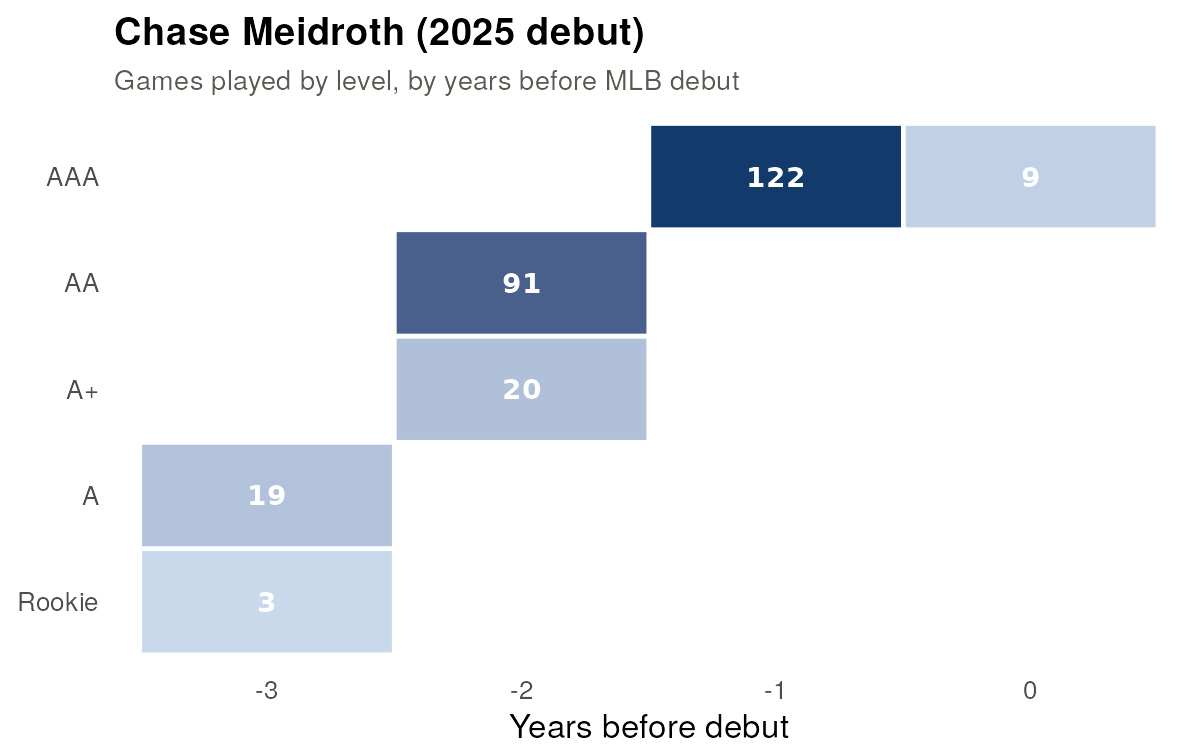
Chase Meidroth perfectly encapsulates this shift. He logged only 42 games across the lower minors within the Red Sox system before being aggressively pushed to Double-A Portland. Front offices forced him to battle upper-level competition immediately. A development path so efficient it made him one of the positional prospect in the blockbuster trade to the White Sox, who almost immediately graduated him to the Major Leagues.
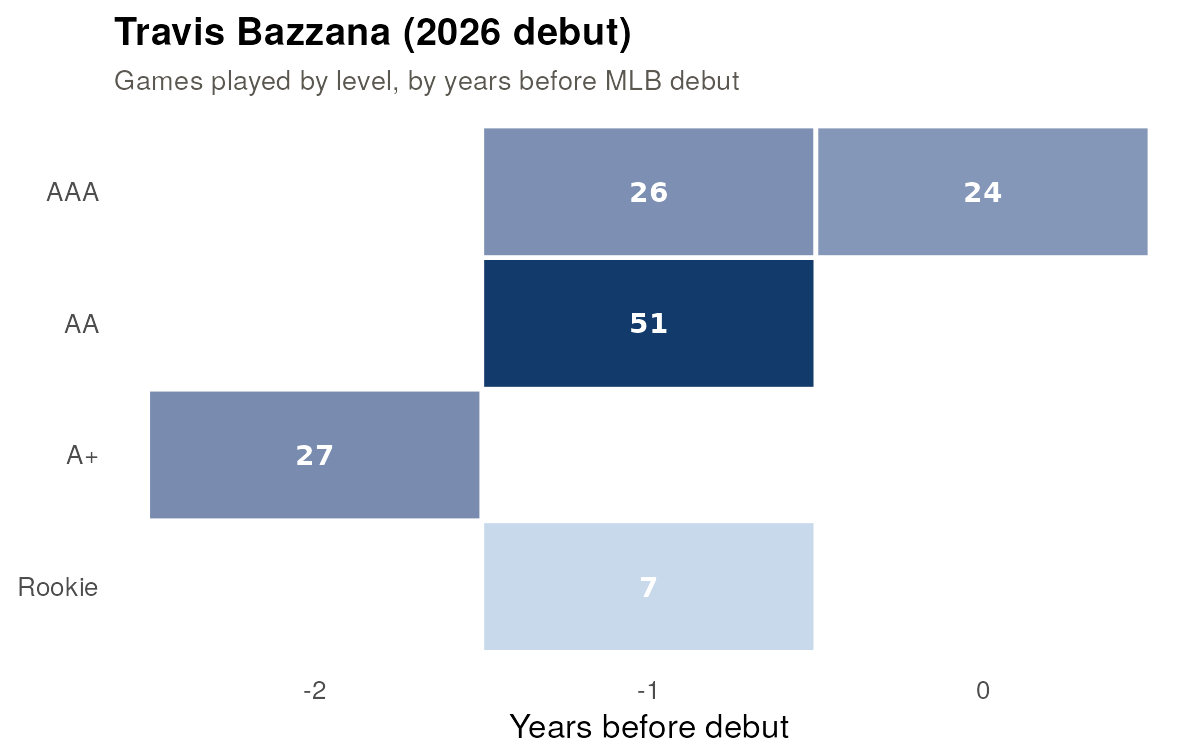
Travis Bazzana is another premier example of this accelerated pipeline. Following his selection as the first overall pick in 2024, he spent a mere 27 games at High-A before stripping away the lower-minor safety net. The Guardians aggressively pushed him straight into the upper minors, forcing him to complete his development against advanced competition at Double-A and Triple-A before his ultimate big league arrival.
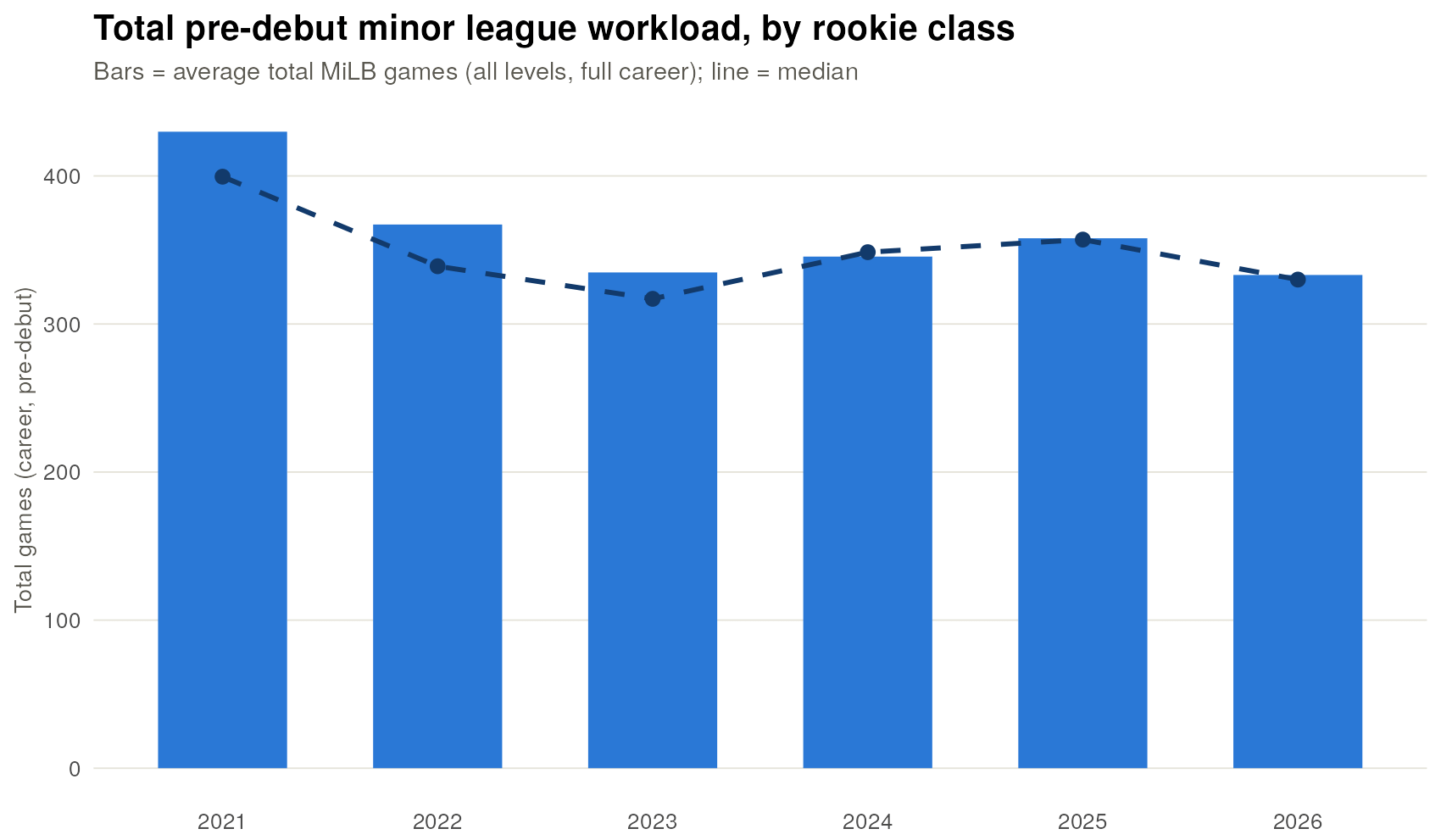
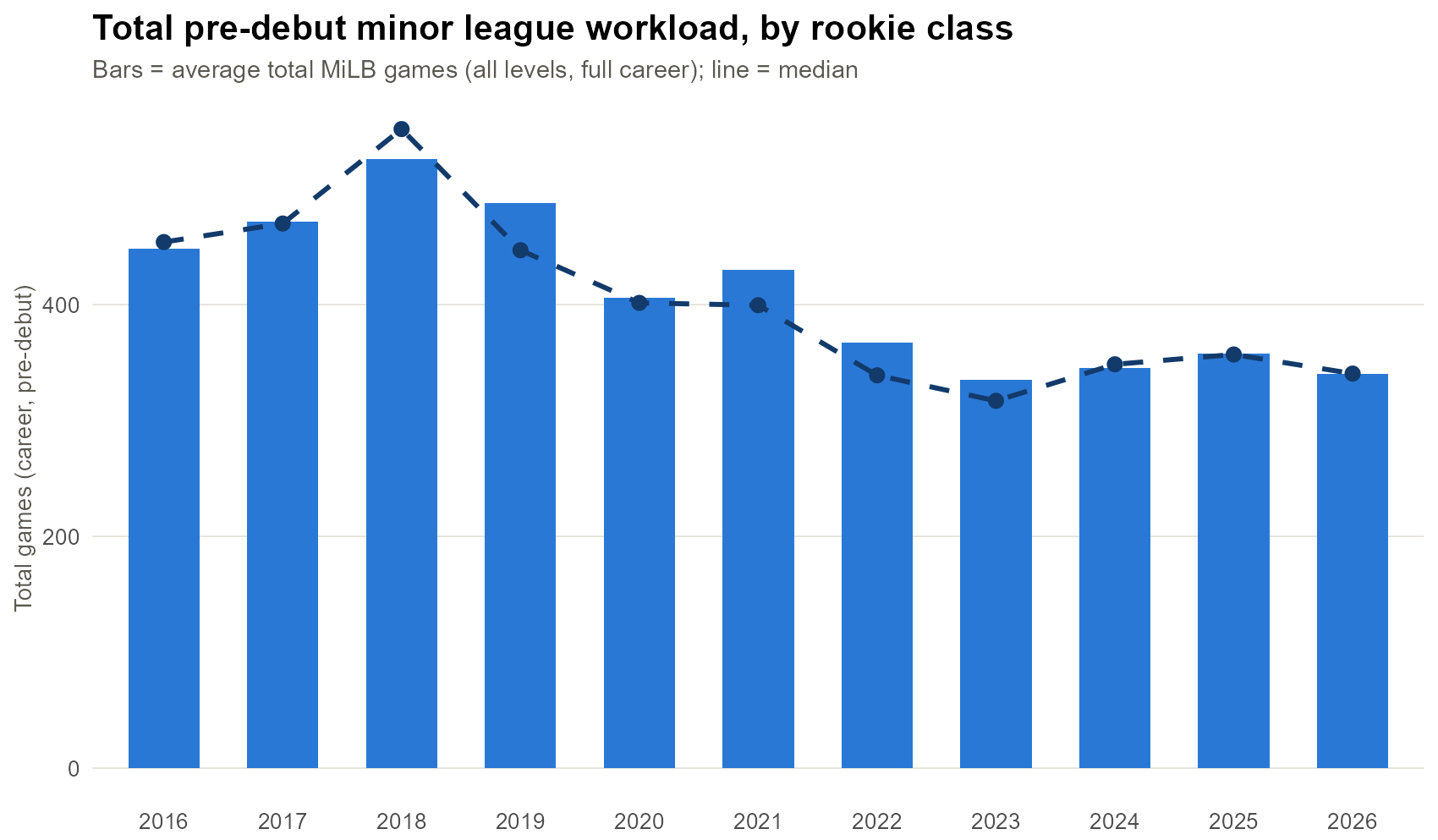
This trend becomes even more stark when looking at total career minor league games. In 2021, a graduating prospect logged an average of over 400 minor league games before debuting in MLB. By 2025, that baseline plummeted to nearly 350 games, shaving off roughly half a minor league season of developmental runway.
Pre-2020, front offices adhered to a conservative, somewhat random quota, seemingly believing a prospect needed 100-plus games at both Double-A and Triple-A to prove readiness. Today, the industry has shed that caution. Teams have either unlocked superior development tools, or they finally realized they were “overseasoning” players wasting time that they could be adding value at the big league leve instead of on minor league buses.
My bet is that over the past several years, organizations have dramatically improved their player development feedback loops and training environments. Rather than simply accumulating reps, players now receive faster, more actionable feedback, individualized instruction, and are challenged in increasingly competitive, game like environments.
The result is a shorter path to the major leagues. By accelerating development, teams generate a quicker return on their investment while also evaluating players against big league competition at an earlier stage of their careers. That earlier exposure provides valuable information, allowing organizations to identify sooner whether a player possesses the physical tools, decision-making ability, and adaptability required to succeed at the highest level.
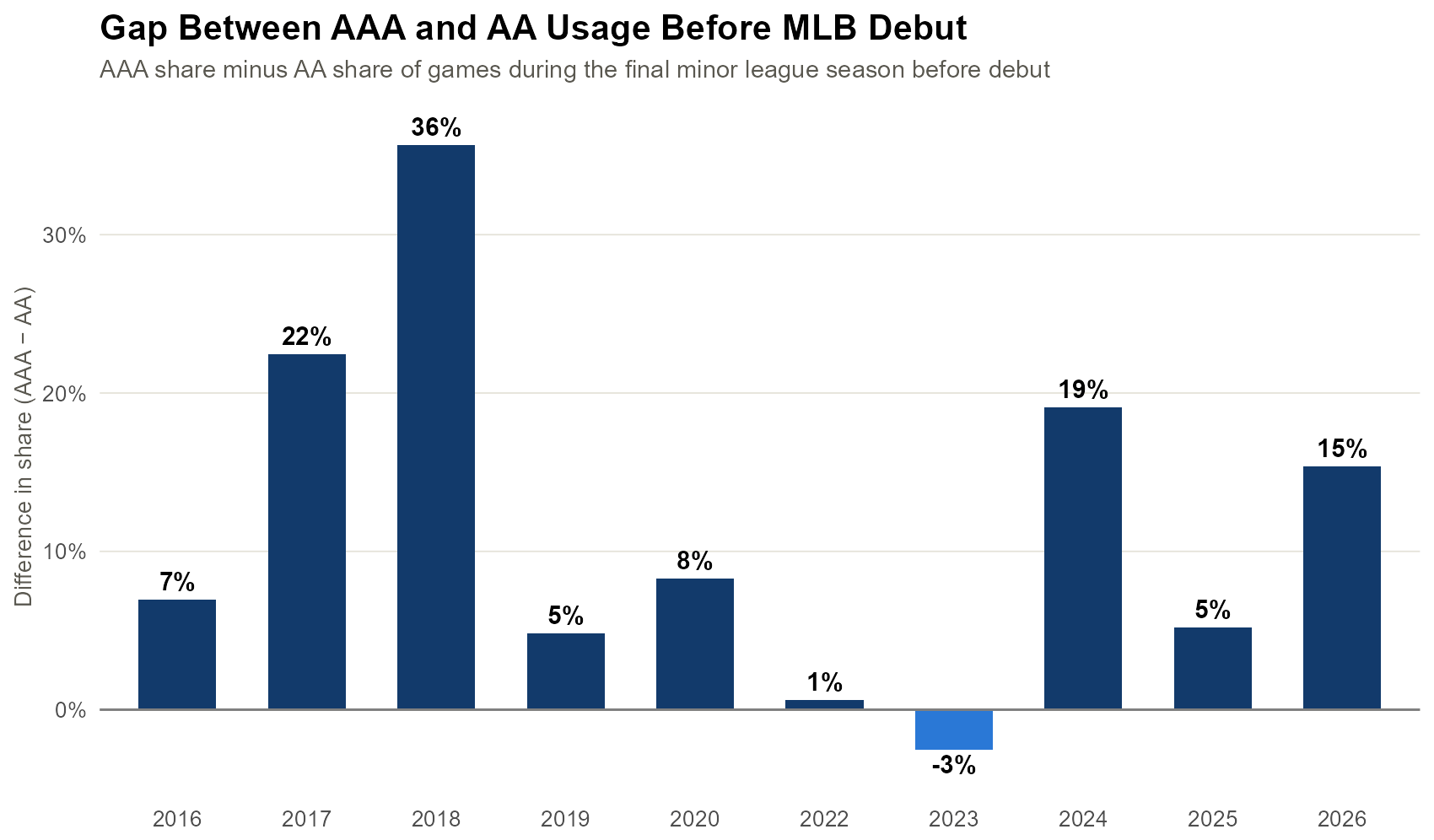
This rapid acceleration has fundamentally changed the relationship between the two highest levels of the minors. Historically, Triple-A dominated a prospect’s final development share before their big-league debut in 2018, Triple-A held a 36% higher share of playing time than Double-A.
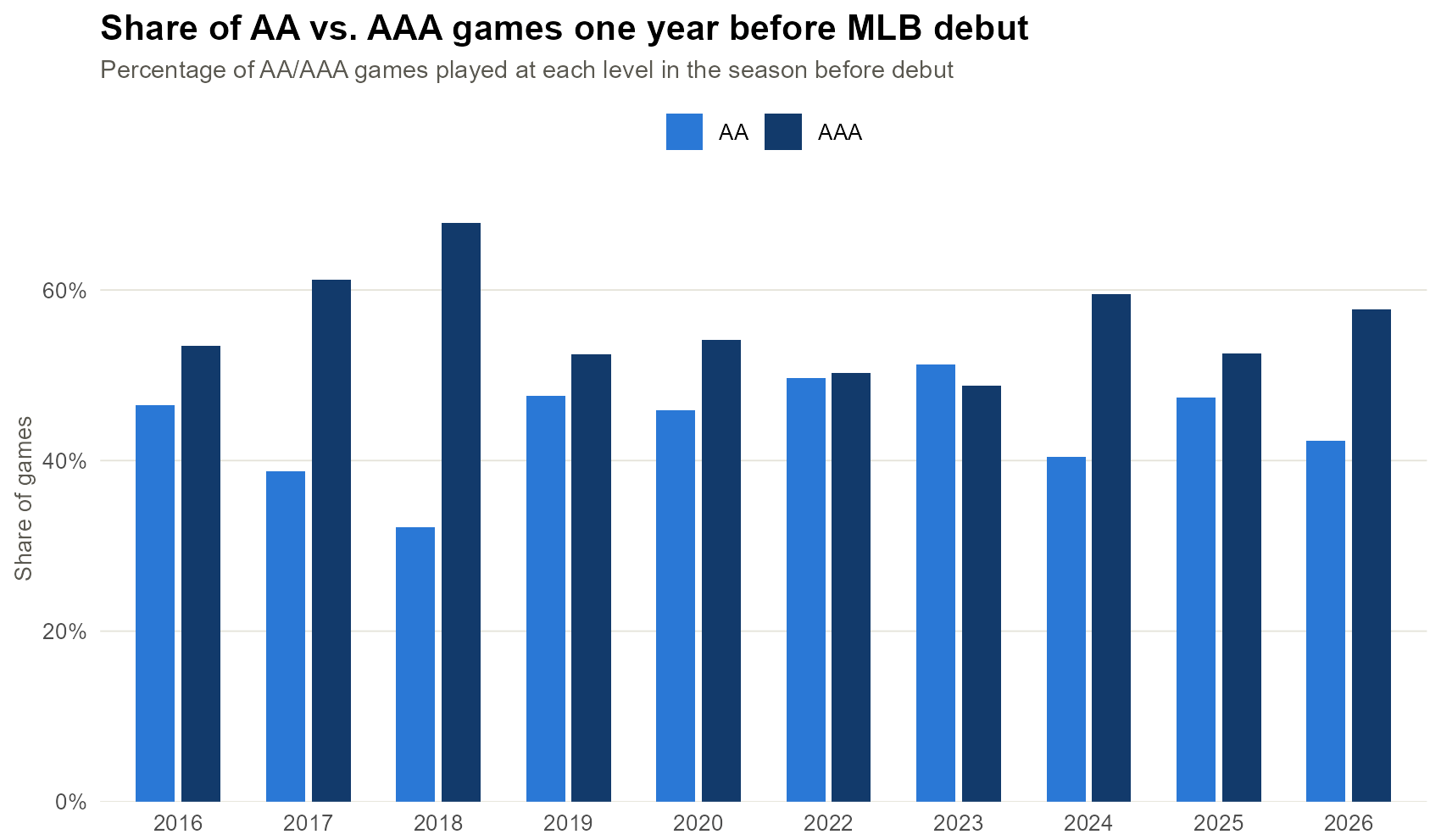
Today, that gap has leveled off to between 5% and 19%. Double-A has closed most of that gap, turning what used to be a lopsided finishing school into a genuine split. By rebalancing these shares, modern front offices have proven they no longer value minor league longevity they value immediate, high level competition for their top prospects.
As the minor leagues have reorganized over the past decade, front offices have increasingly shifted the final stage of player development to the Major League where the industry's best coaches, data tools, and environments actually live. By compressing a prospect's minor league timeline by 50 to 75 games, the big league staff now inherits the finishing work previously left to affiliate staffs. The Major Leagues are no longer treated as the final destination, but as the final classroom. Those missing 75 games of development now occur in real-time as players accumulate Major League service time. Mistakes are viewed not as failure, but as an acceptable tuition cost teams have decided that navigating the learning curve against big league competition is the only way to bridge the gap that the minor leagues can no longer replicate.
Very interesting. You can really see the air bubble 2020 created. I imagine -- since PD investment and strategy varies so much between the different franchises -- that you might see radically different timelines between the individual clubs.