
Pressure Points: Capitalizing on High-Leverage Situations with Your Bullpen

In one unforgettable late-season showdown, a manager’s daring decision changed the course of the game. With the score tied and tension mounting, he didn’t wait for the traditional save situation—instead, he called on his best reliever in the seventh inning. That single move stifled the opposition’s rally and sparked a comeback win, underscoring how a well-managed bullpen can be the difference between a playoff push and a late-season collapse.
The best teams don’t merely reserve their top relievers for ninth-inning leads; they maximize impact during the highest-leverage moments. A key challenge for managers is balancing short-term wins with long-term effectiveness—ensuring that their best arms are used when they matter most.
Some managers stick to conventional roles, deploying their best relievers primarily in save situations. Others take a more aggressive approach, inserting these arms into earlier, more ambiguous moments when the game’s outcome is still in the balance. But which strategy really works? Are teams optimizing their bullpen usage, or are they clinging to rigid roles that leave critical opportunities on the table?
By examining leverage data, usage trends, and real-world outcomes, we’ll break down which managers are truly maximizing their bullpen’s potential. For example, we analyze how often a team's top five relievers appear between the 6th and 10th innings in various run-difference scenarios. This deep dive reveals whether teams are strategically deploying their arms or waiting for the elusive perfect moment that might never come.
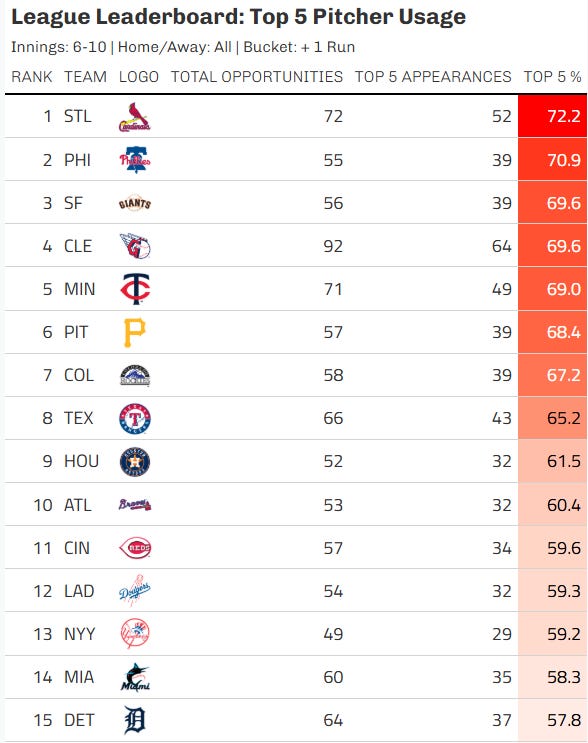
Almost immediately, the traditional approach shows its flaw: teams with losing records sometimes hold back their best relievers for ideal late-game situations. In doing so, they let winnable games slip away—like saving your secret weapon for a skirmish you’re already winning while the true battle rages on.
Consider teams like the Rockies and Pirates. With thinner rosters, they often prioritize saving their top arms for potential save opportunities rather than using them to keep games within reach early on. This reactive strategy can cost them dearly when critical moments pass without their best arms on the mound.
Meanwhile, teams like the Yankees and Dodgers employ a different tactic. In a memorable scenario last season, a Dodgers manager brought in his ace with the game tied in the seventh inning—a decision that not only stifled the opposing offense but also shifted momentum in his favor. This more progressive approach isn’t about mismanagement; it’s about recognizing that high-leverage situations extend beyond traditional one-run leads. These managers are willing to use their best relievers when the game is still up for grabs, whether the score is tied or the team is trailing by a run.
Such decisions highlight the day-to-day flexibility required in bullpen management—one of a manager’s most critical strategic tools. The key isn’t just who gets the ball, but when they get it. Ideally, teams would deploy their best relievers in the moments that could swing the outcome of a game. But for teams with limited resources, waiting for the perfect moment can mean missing the chance to change a tight contest.
Teams Most Aggressive in Deploying Top Relievers When Trailing by One
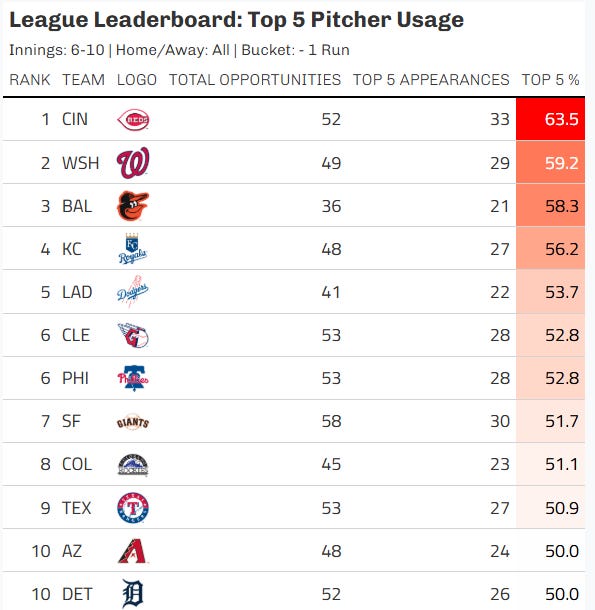
Instead of merely protecting leads, some teams tackle challenging situations head-on. How do they fare when trailing by one run late in games? The answer lies in their willingness to deploy their best arms in ambiguous, high-pressure moments.
Take, for instance, a recent contest where a manager, confident in his team’s offensive firepower, brought in his top reliever when they were down by one in the eighth inning. Rather than waiting for a nearly guaranteed win later, he trusted that a timely strikeout or run prevention would provide his hitters with the breathing room they needed. Teams with powerful offenses, like the Orioles and Diamondbacks, often embrace this risk, betting that their lineup can capitalize on a momentum shift. Conversely, teams with weaker offenses might hesitate, fearing that burning a top arm in a low-probability situation could be a costly misstep.
Leverage in the Balance: How Top Teams Manage Tie Games
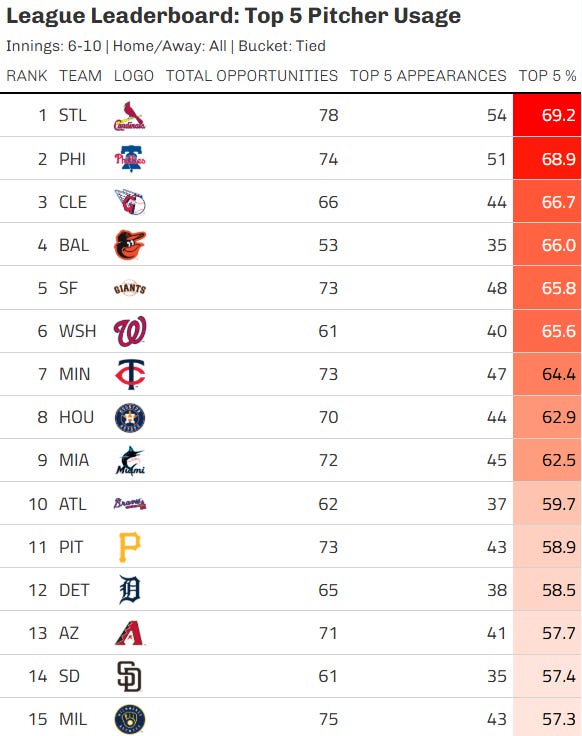
A tied game represents a pivotal moment—one where the outcome hangs delicately in the balance. Some managers see it as an opportunity to seize control, while others adopt a more cautious stance. The most aggressive teams don’t merely extend the game; they use their best arms to quash any budding momentum from the opposition.
In one illustrative game, a manager deployed his star reliever during a tense tie, right when the opposing team was showing signs of a rally. That decisive call not only halted the momentum but also shifted the pressure back onto the opposition. Meanwhile, more conservative managers risk their best resources too late, sometimes watching as a key moment slips by and the game tilts in favor of the opponent.
Bullpen management isn’t about isolated decisions—it’s about recognizing patterns over time. A single game, or even a short stretch, can create a misleading narrative about how a team truly operates. The best-managed bullpens follow a long-term strategy, balancing immediate wins with season-long effectiveness. To properly judge bullpen usage, we need to zoom out and analyze trends, not just snapshots.
Teams need to be more flexible in deploying their best bullpen arms. Far too often, managers wait for high-win probability situations—like holding onto your trump card until your opponent has already played all their best cards. By reserving their ace for nearly guaranteed wins, they risk missing the chance to turn the tide in a tight, game-deciding moment. Instead, these high-leverage arms should be inserted into ambiguous, critical situations where their impact can truly swing the outcome.
Find the full league metrics and different performance data here: Joshua-Rodrigues RP Usage