
The Play Isn’t the Point: Navigating 1,512 Game States

In baseball, situational play is too important to treat like a checklist. Yet that’s exactly what happens: coaches carve out an isolated game state, walk players through the “right” response, and lock all the attention onto that one narrow moment. It works in isolation, but it trains players to think in disconnected pieces instead of recognizing the patterns that actually drive the game.
If you’re going to talk about situations, you have to start with a core idea: understanding how players navigate moments matters (these isolated game states), but obsessing over each situation as its own standalone lesson becomes a trap. That’s how coaches drift into over teaching isolated game states instead of building the broader concepts players need to read the game, anticipate, and adjust.
If you take just the basic ingredients of a baseball game such as the base state, outs, inning, score differential (only between down 3 and up 3) you’re already looking at 1,512 possible combinations. The most seasoned coaches can navigate that maze without blinking. But almost no player gets to that level of detail before their career is over, and expecting them to memorize or rehearse every one of those moments is unrealistic.
Isolated game states are the moments coaches get way too excited about. You know the type: runner on first, one out, deep fly to right, fielder’s momentum carrying him toward the wall and deciding to tag. It’s the exact kind of play everyone wants to break down after a smart read or a heads up move. And sure, it’s interesting, but the problem with isolated game states is simple: they’re so specific that there are far too many of them for coaches or players to treat one by one.
Which is why most people eventually fall back on a handful of rules of thumb. But that still misses the point. The real solution isn’t trying to memorize more isolated game states, it’s grouping them. We must view the game as a stack of variables. When players understand how these variables interact, they can transfer that logic across all 1,512 possible situations.
Situations = isolated moments as they appear in a play.
Game states = the variables that define context (score, inning, outs, bases, hitter, defender skill).
Transfer = the ability to apply understanding from one situation to another, even when the specifics change.
The concept of Transfer is the engine of this philosophy. It collapses those 1,512 combinations into a manageable set of patterns. Instead of teaching players to react to a specific “runner on first, ball in the gap” scenario, you teach them to recognize the underlying variables the reads, pressures, and priorities that dictate the game.
This creates a mental model: a framework that allows players to understand the structure of the game rather than just reacting to the surface level action. Once a player understands the principle like how a defender’s momentum affects a baserunner’s risk they can apply that same logic to a fly ball, a ground ball or a bunt situation. They aren’t memorizing outcomes they are learning how to think. Because these variables stack neatly on top of one another, we can compress hundreds of isolated game states into a handful of patterns that scale across an entire organization.

Take a simple example on the bases: a player recognizes a leverage point, like from earlier when we consider a runner on first can tag up because the outfielder’s momentum carries him away from the base. That principle reading momentum, timing, and risk applies whether it’s a fly ball to right with one out, a shallow line drive, or even a grounder with the SS shifted up the middle of play. The mental model is the same but the variations of the situation are important to understand.
Players learn a consistent framework that doesn’t change depending on who is teaching the situation. Instead coaches teach their own set of isolated plays, the organization builds a shared model of play that compounds over time with more variables being layered on top to add depth to players’ understanding. Coaches help to reinforce these principles without getting bogged down in hundreds of individual situations but rather focusing on the variables themselves which shift how players act on the field.
What we’re really trying to do with focusing on the variables of play here is that the variables are what dictates the decisions on the field. The outs, inning, and base state all shift what happens when it comes to these different situations. Taking situations that pop up in games with players and focusing players on what the variables were that made them make these decisions is what we should be doing. Almost universally across baseball and sports coaches put the focus on executing specific situations above all else. And that isn’t wrong, its just flat. It doesn’t take in how play could have pivoted if other things popped up. What we should be aiming to do with our situational teaching is to let players apply a single idea across multiple moments on the field.
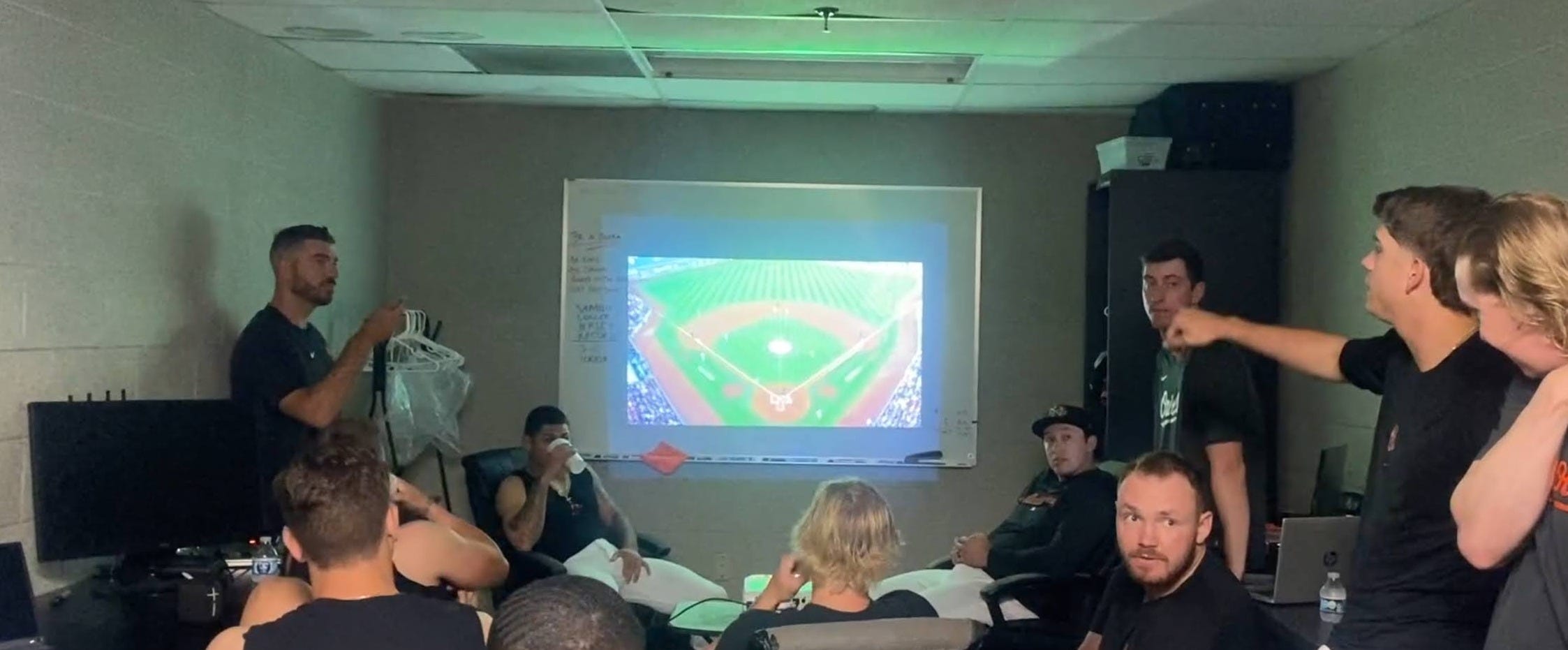
In the room, this whole approach shows up as a line of questioning. You take the play that popped up in the game, you run it once, and then you start pulling on the variables. What if the runner is at third instead of first? What if the outfielder is coming in instead of going back? What if this is the ninth inning instead of the fourth? What if our scouting report has the first fielder with a plus arm? The video stays the same, but the context shifts every time. That’s the point. You’re training players to see how the game evolves as the variables move, not how one isolated clip played out.
This is where the coach earns their money by asking questions that force players to think through the situation as if it were happening in multiple variants. When you do it well, players stop seeing “the play” and start seeing the structure underneath the play. That’s the skill they carry with them on the field. And it’s the same philosophy you see in the Belichick clip: one situation, multiple lenses, same underlying model.
The play isn’t the point when it comes to teaching players, you could never script or rehearse every possible play in a baseball game there are simply too many unique variations for any player to see them all ahead of time. As much as we’d love to prepare them for every situation before they face it, that’s not how the game works. The only sustainable path is teaching them the patterns underneath the play. That’s where transfer and ultimately transfer do the heavy lifting. They give players a structure they can apply across dozens of different versions of a moment, so they’re not memorizing outcomes but learning how to read the game and make decisions that hold up no matter how the situation shifts.
IKF still didn't get a good enough jump off 3rd.