
Two-Strikes and Strategy: Analyzing the Shift in Bat Speed and Contact Point

The dynamics of an at-bat shift dramatically depending on the count. As hitters gain the upper hand with favorable ball counts, they’re often able to take more aggressive swings in a wider range of situations. Conversely, when they fall behind, we typically see a more conservative, defensive approach take over. In previous discussions, we’ve explored how bat speed and swing patterns adjust based on the count. In this piece, I want to take that analysis a step further—diving into how hitters not only modify their bat speed, but also shift their point of contact. Using data from Baseball Savant collected throughout the 2025 season, we’ll examine how players are adapting their approach in real time.
We’ve seen in past posts that this dynamic tends to follow a predictable pattern: as hitters gain count leverage, they’re more willing to take aggressive swings and expand their offensive approach. On the flip side, when they find themselves in less favorable counts, the at-bat often turns into a more defensive, reactive battle—a game of cat and mouse where survival takes precedence over power.
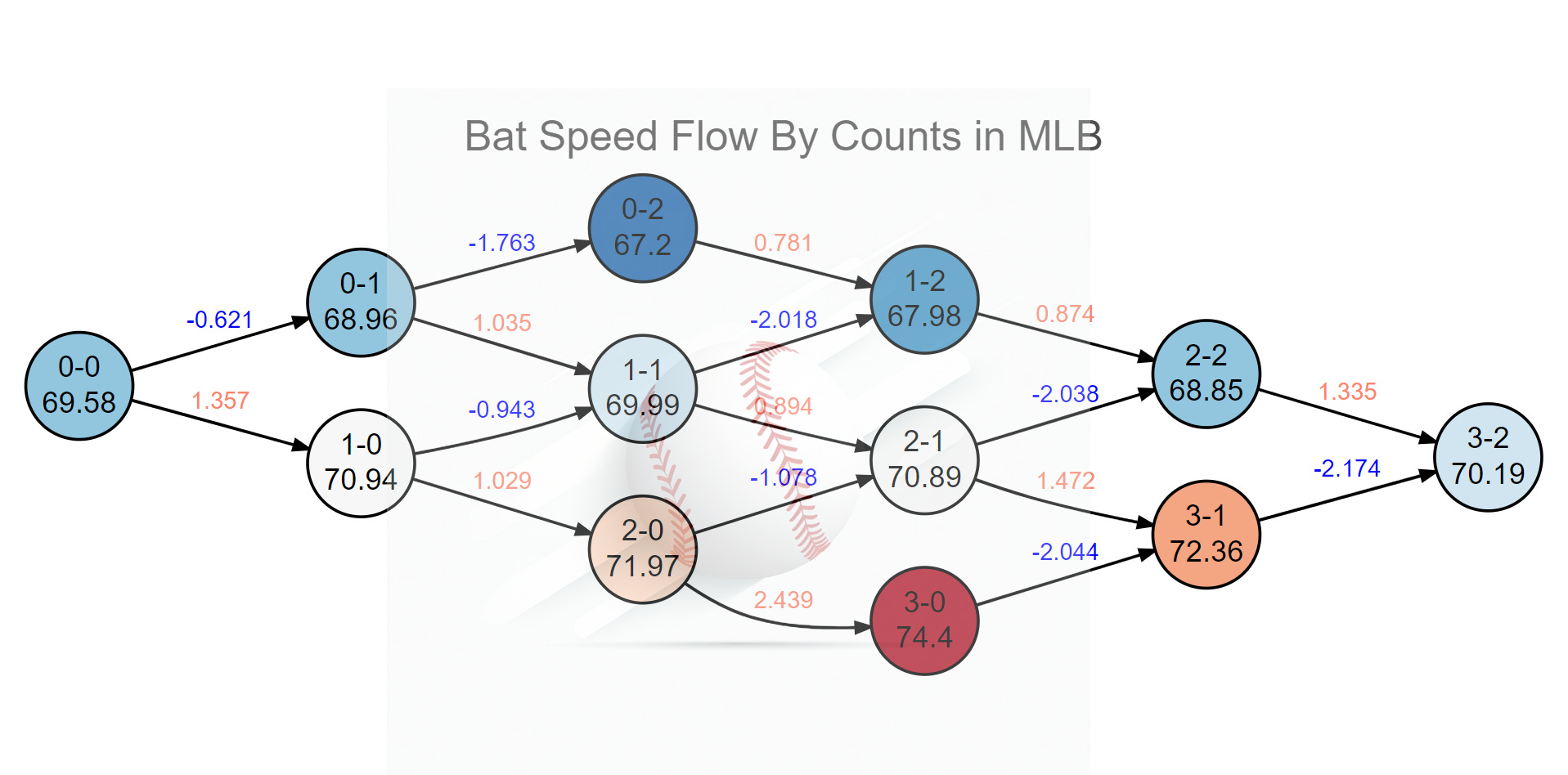
But how do players shift their Contact Point along with their bat speed as they move through the count?
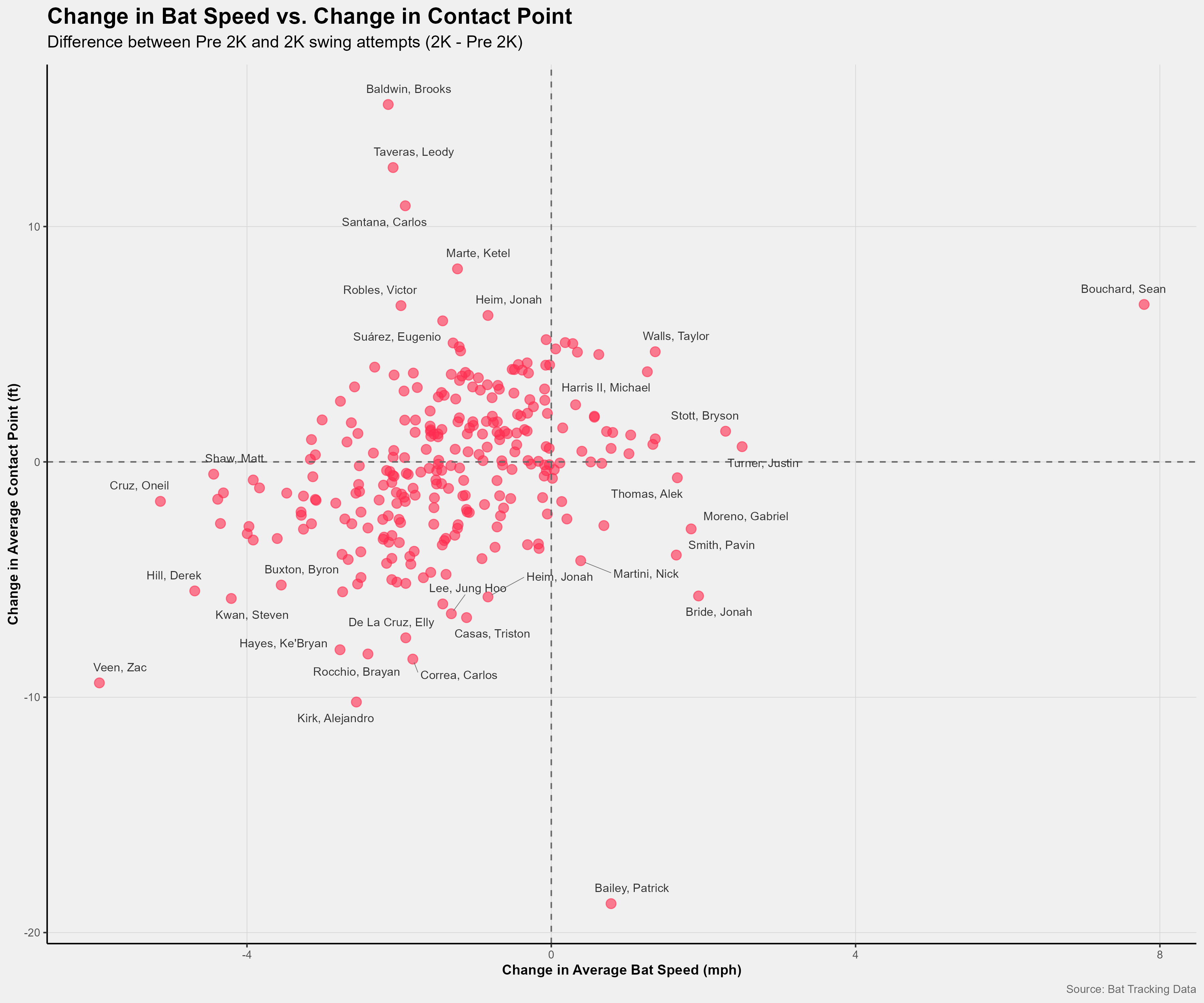
Again, this follows a fairly predictable pattern. As players enter two-strike counts, we would expect a drop in bat speed, paired with an intentional effort to move the contact point slightly deeper in the zone. The goal here is often simple: make contact and put the ball in play, even if it comes at the expense of power or ideal outcomes. The biggest takeaway is that most players deliberately dial down their bat speed in an attempt to be less aggressive and gain better control over the baseball. What’s more surprising, however, is that we don’t see a drastic shift in contact point across the board. While some hitters do adjust and move the ball deeper, others appear unable—or unwilling—to make that same adjustment. The result? Slower swings paired with nearly identical contact points, which can lead to less effective outcomes.
Rarely, if ever, are hitters asked to swing slower in the cage or during batting practice while maintaining the same contact point. Logically, a slower swing should push the contact point deeper, since hitters have less time to catch up to the pitch. Yet in games, we often see players reduce bat speed without a corresponding adjustment in contact point—raising questions about how well-prepared they are for these in-game adaptations.
Let’s now dive into how changes in both bat speed and contact point influence players’ outcomes, specifically in terms of their balls in play. To measure this, we’ll use Statcast’s Squared Up Rate, which, in my view, is a solid indicator of a player’s success in doing exactly what they aim for: squaring up pitches and making solid contact. By examining this metric, we can better understand how adjustments in swing mechanics correlate with hitting success.
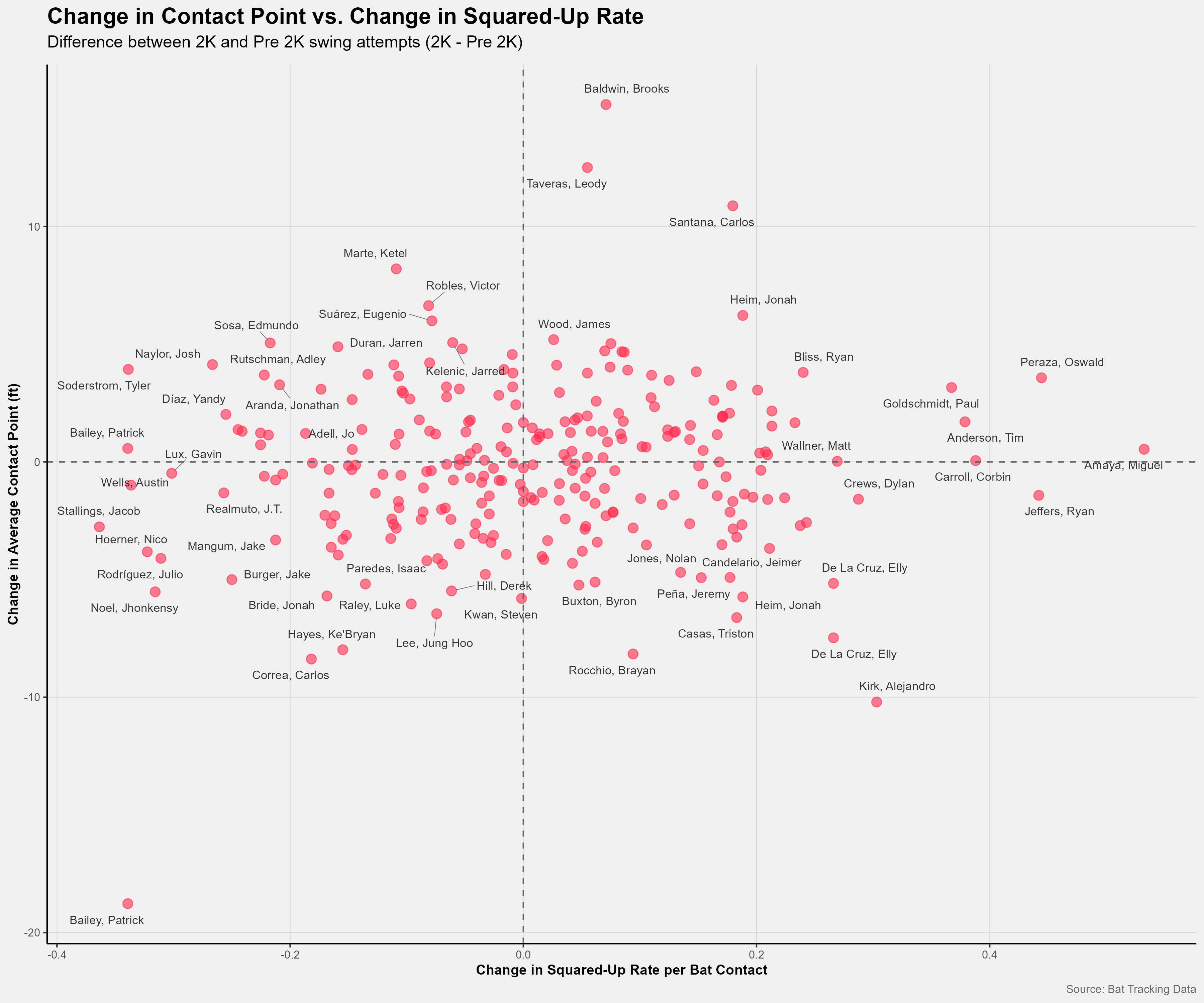
Once again, we don’t see a significant change in how players square up pitches across different count situations, even as bat speed fluctuates. The data doesn’t offer much signal here. Players who maintain a consistent Squared Up Rate tend to also keep a similar contact point. This suggests that hitters who aren't adjusting their approach to see the ball deeper are, in fact, doing exactly what they practice daily. However, we do observe some players making adjustments upward, which indicates that many are struggling to adapt their contact point as much as they’d like—or as much as they believe they can. In fact, some players in the bottom-left quadrant show a decline in their ability to square up pitches, even as they try to adjust to deeper contact points. I like to think of the top right corner here as players who are effectively producing at a high level and also going to get the ball further out front.
Next lets look at how Bat Speed Changes and how they compare to Squared Up Rate.
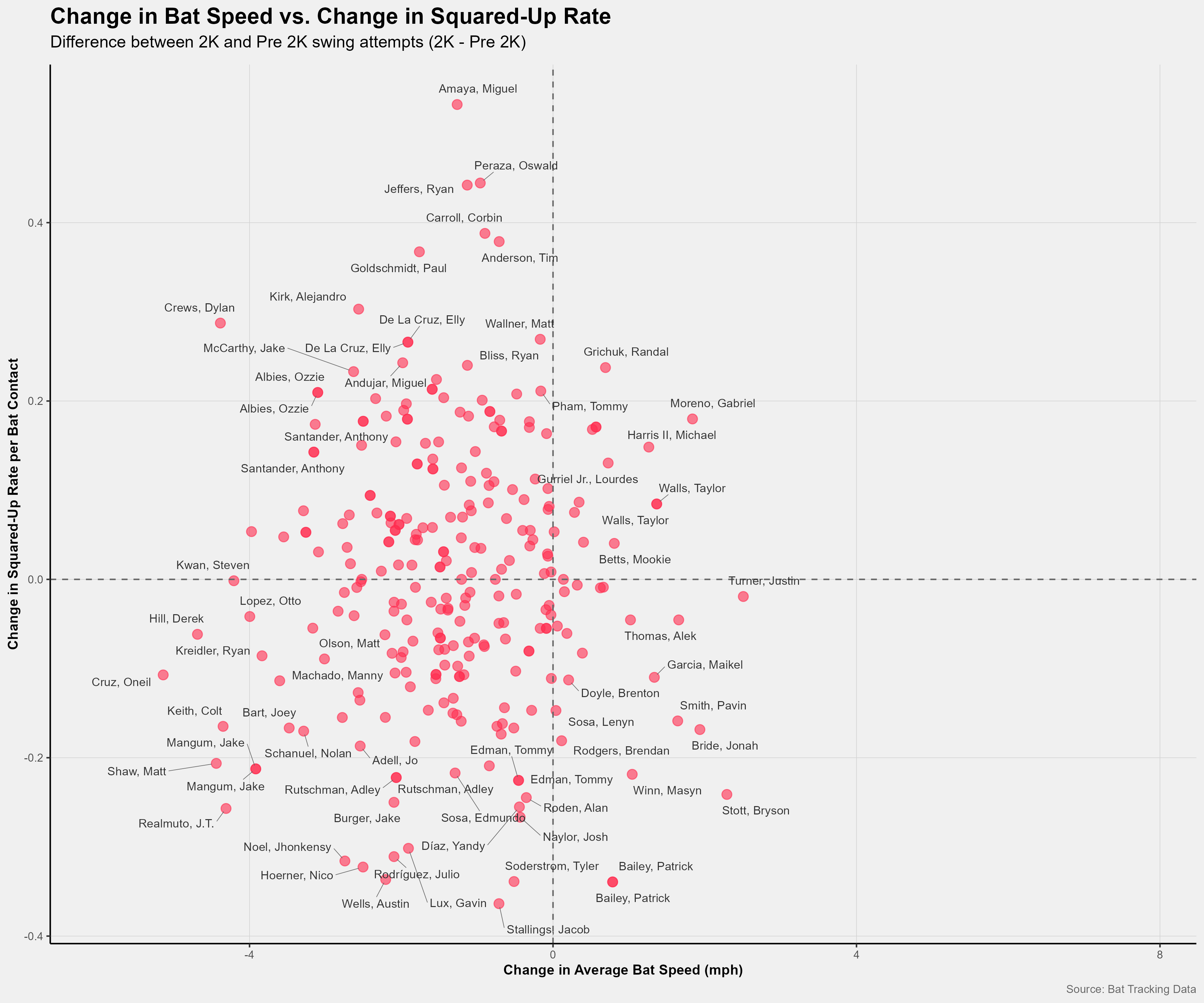
Once again, we see the entire league reducing bat speed in two-strike situations. It seems that most players have adopted a similar approach: swinging less aggressively to maintain consistent production. However, for some players, overcommitting to this strategy results in a loss of their ability to square up the baseball effectively.
Lastly we can see that Swing Length and Contact Point both follow a very consistent pattern of change between players and across the league as well:
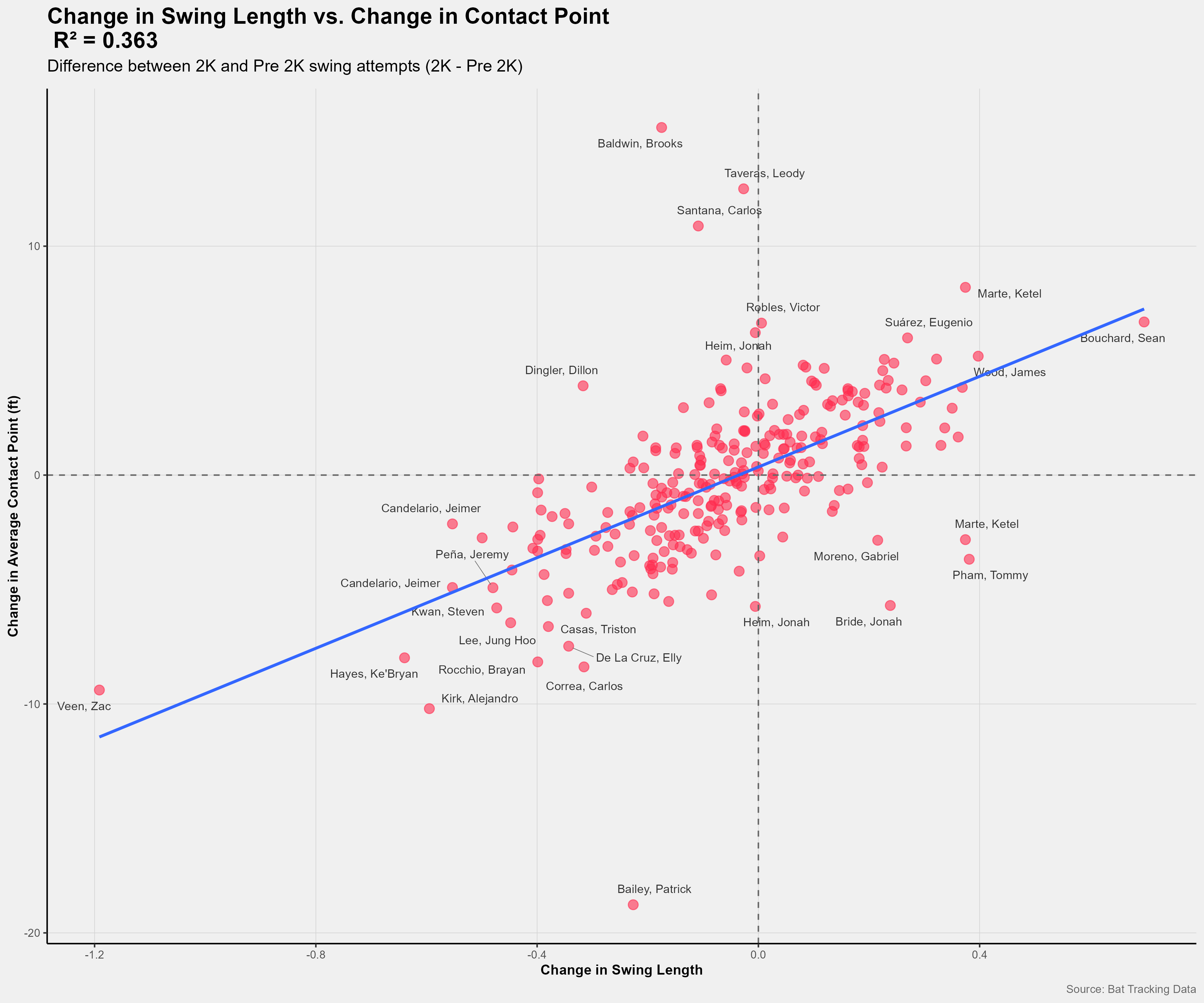
In the end, what’s clear is that hitters are constantly balancing the need for control with the desire to make solid, impactful contact. By understanding how these adjustments play out in different count situations, players can better prepare themselves to maintain consistent production, no matter the circumstances. The best hitters are those who can make these shifts without losing their edge—and that’s what separates good from great.