
Uncomfortable by Design
Inside the data, skill requirements, and tracking tools from our season behind the plate at UMass Dartmouth.

When it comes to player development, coaches often try to squeeze players into a mold. They want hitters to swing a certain way, pitchers to move a certain motion, and catchers to think and act according to a predetermined blueprint. The result is that players spend more time trying to become the version of themselves the coach envisions rather than becoming the best version of who they actually are.
I’ve seen this approach firsthand, and I can tell you that it rarely serves the players well. The changes that coaches want become harder, harsher, and slower because they are being forced rather than discovered. Players begin chasing movements, mechanics, and behaviors that don’t come naturally to them, simply because they believe that’s what the coach wants.
The best development environments don’t demand conformity they provide direction. They establish standards, teach principles, and create boundaries, but they also leave room for players to own their movements, their decisions, and ultimately their identities.
This idea becomes especially challenging when working with catchers. On the baseball field, having an understanding of what players are going to do and how they will react in certain situations is the ultiamte for ac coaching staff. Having cutoff responsibilities mapped out for just about every type of ball is the most obvious example of this. The real challenge comes with each individual player and how they go about their business behind the plate. That's the philosophy I keep coming back to in catcher development: freedom within a framework.
Some catchers feel their best with one knee down, while others want to stay neutral with both knees up. It is much harder to create space for players to work within a given system, but that’s exactly what development requires. Players need room to accomplish what we want them to accomplish. If we try to squeeze everyone into one bucket, it isn’t ideal for anyone it just makes things easier for the coach.
At UMass Dartmouth this season we wanted to be aggressive stealing strikes at the bottom of the zone. Umpires struggle there more than anywhere else on the plate and we wanted to take full advantage. How each catcher attacked that problem was up to them. Our job was to give them the tools, while their job was to win the pitch.
The focus wasn’t on making everyone look the same. The focus was on producing the same outcome.
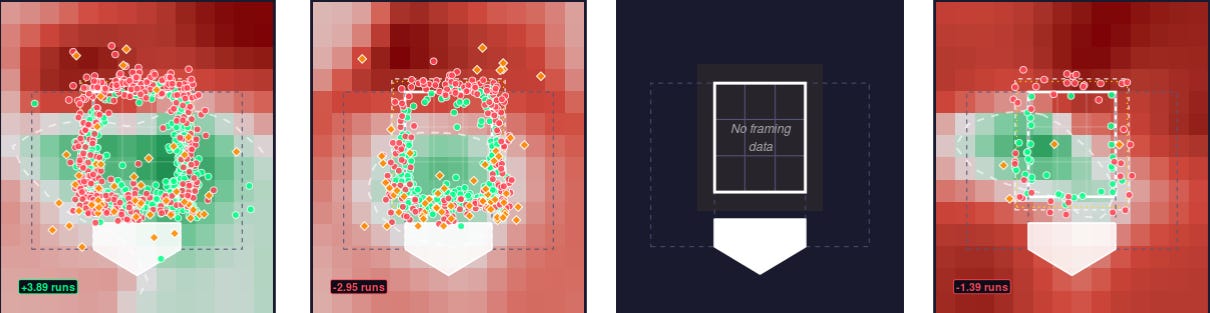
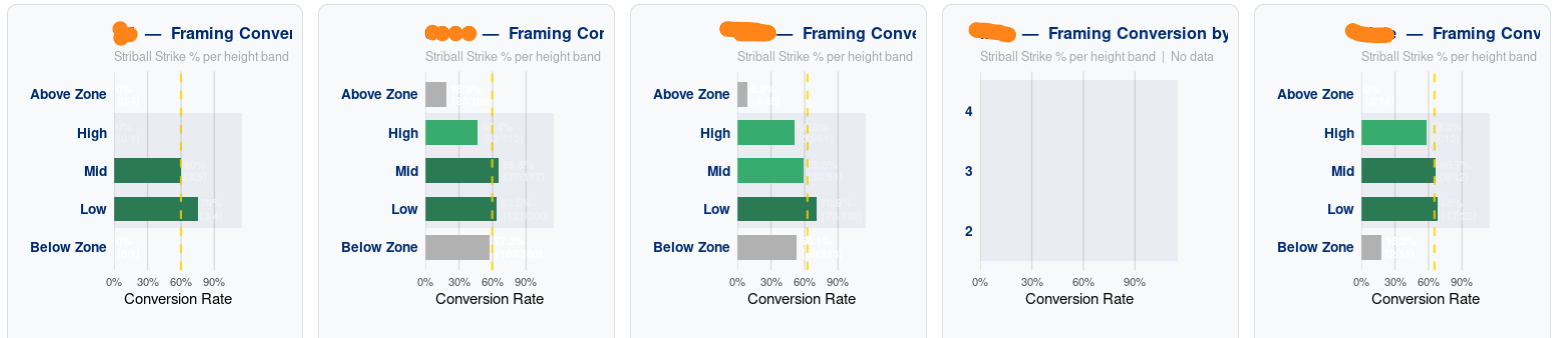
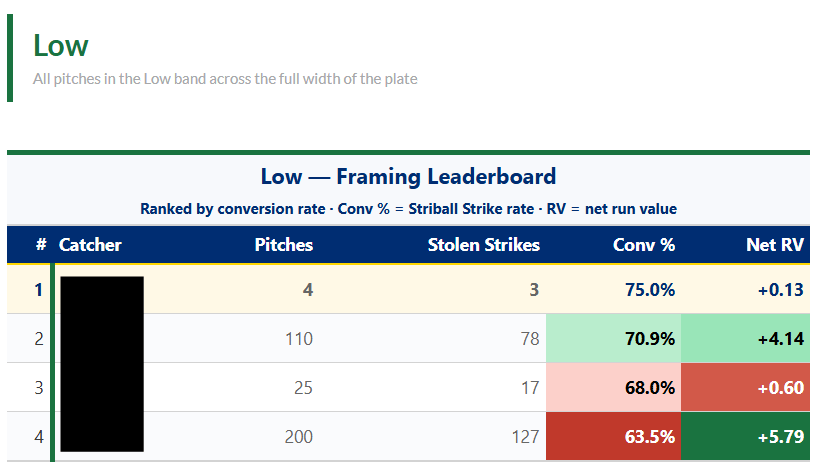
Every catcher got to there differently. The heatmaps show where they were winning while the conversion rates show how consistently they got there.
The data shows where they won. The video shows how watch the catch and then the movement after are two separate actions here when they should be one.
While this is closer to what it should look like.
But freedom has limits. And the fall showed us exactly where ours were.
Freedom within a framework only works if the framework is real. That means there are non-negotiables baseline skills that every catcher has to own regardless of their preferred style or feel.
The clearest example was pitches up in the zone. When fastballs elevated, catchers were standing up in their crouch and either missing the ball or dropping it entirely. Not a feel problem, not a style problem. A fundamental that couldn’t be negotiated around because dropped balls move runners and create defensive chaos regardless of how good your framing numbers are everywhere else.
That’s where the framework has teeth. Some things aren’t about preference. What we needed was for catchers no matter what knee they put down or how they decided to start with their glove to be able to pop out of their stance and be able to own these types of pitches.
We went into the lab and started testing. Set the pitching machine for fastballs up in the zone and made catchers set up as though they were expecting a pitch low then forced them to jump out of their stance and handle balls at head height or higher. Uncomfortable by design.
We also wanted to give the action a name something simple everyone could rally around. We called it the “Step-Out.” One term, a shared picture of what it looks like and what it demands.
From there we tracked it. Every Step-Out tagged, every location added. We wanted to know exactly where catchers were being tested and whether they were winning.

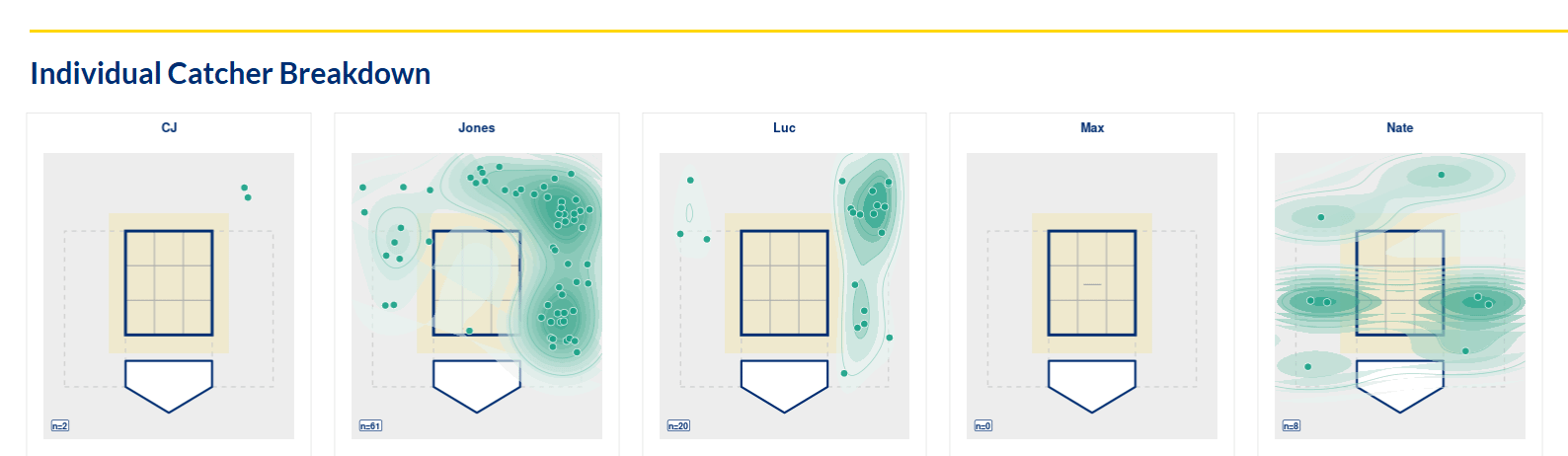
The same system tracked drops giving us a live view of where catchers were making mistakes and whether any trends needed to be addressed as the season went on.

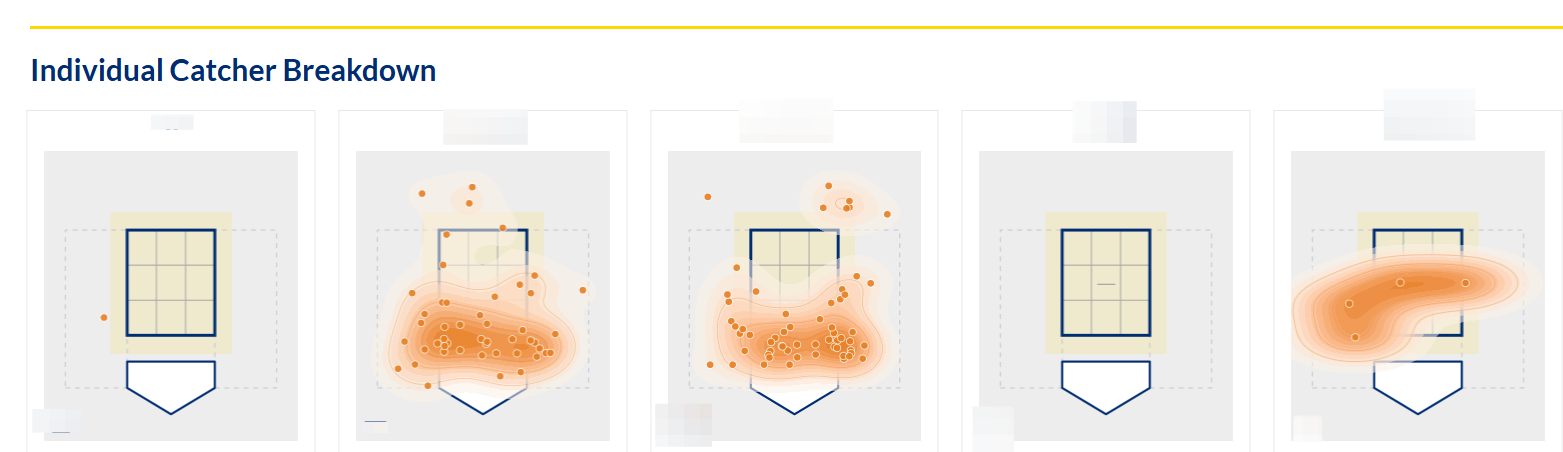
Freedom within a framework isn’t a soft idea, it’s something has teeth, it has infrastructure. It has non-negotiable skills that every catcher has to own regardless of style or preference and a system underneath that holds them accountable to it.
The Step-Out isn’t about conformity what it’s really about is being competent at a skill. Every catcher finds their own way to execute it, but ultimately they all have to execute it. That’s the framework and standard that is set within a system like this. And the Step-Out is just one example there are hundreds of things a catcher has to own to compete at each level that they reach. The freedom lives inside all of it.
All of this is true in management and the arts as well.